Guides · Navarre Beach, Florida
Why Navarre Beach Is Where It Is
The name on the map predates the place. When Colonel Guy Wyman platted a community called Navarre in 1925, he gave the Florida Panhandle a Spanish province's name and not much else. There was no rush to build. The land stayed low, sandy, and largely unbothered. That delay, more than any single decision, is why Navarre Beach feels the way it does today.
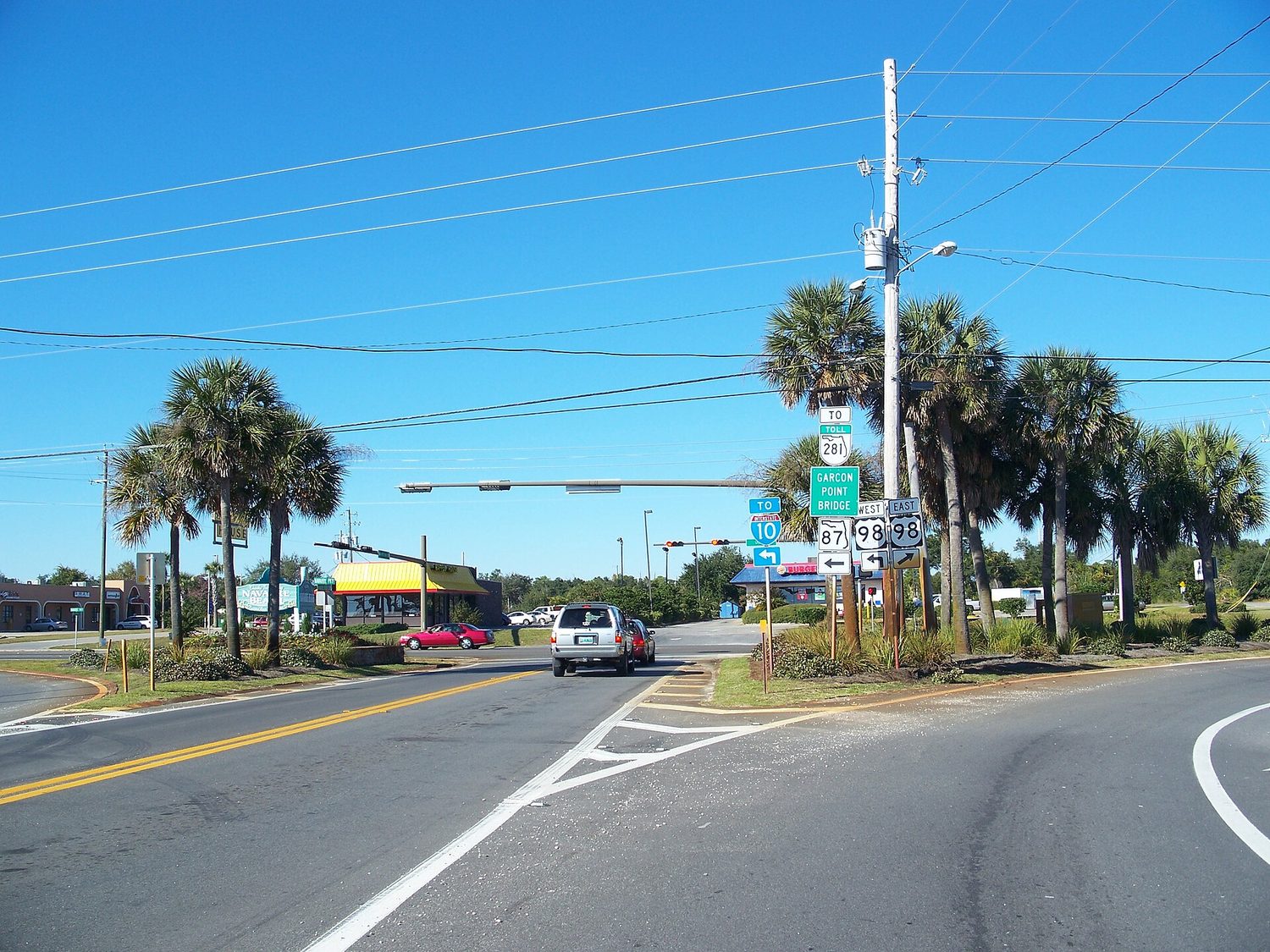
Stand on the sand and the geography does the arguing. The Gulf Islands National Seashore sits immediately west, a stretch of protected coast that stops development cold. East of that lies the community itself, and beyond it, Pensacola Beach. The result is a narrow, quiet shelf of shore wedged between a national seashore on one side and a busier beach town on the other. Almost nothing in between. That is the whole point.
A Century of Waiting
Wyman’s 1925 plat was an intention, not a construction plan. For decades, the area remained what it had always been: a slow, scattered stretch of coast that stayed quiet far longer than its neighbors. While other Florida beaches filled with mid-century momentum, Navarre sat back. Growth came, but it came late and low.
The numbers tell the story of a community that never wanted to be a crowd. The population today is 1,583 people. The median age is 51.8 years. This is not a place built for the freshman class or the spring-break charter bus. Of the 2,025 total housing units, 1,217 are held for seasonal or recreational use. That is more than half the housing stock, empty for large parts of the year by design. A further 1,269 units are vacant altogether. The houses are there; the people are not. And that is precisely the appeal.
The Money Stays Quiet
The economics of Navarre Beach are not the economics of a working fishing village. They are the economics of a place people buy into for the absence of noise. The median home value sits at $755,200. The median gross rent is $1,840 a month. The median household income is $125,545. Unemployment is at 2.1 percent, which is effectively full employment. More than half the residents, 50.6 percent, hold a bachelor’s degree or higher.
None of this announces itself. There are no marquees. The affluence here is in the form of a second home with a covered porch, not a nightlife district. The high income and high home values reflect a simple trade: people pay a premium to be somewhere that does not try to entertain them.
The Sanctuary and the Seashore
The beach itself is not the only protected thing. The Navarre Beach Marine Life Sanctuary sits right offshore, a designated area where the water and what lives in it get a measure of peace. It is a small gesture, but it fits the town’s character. Navarre Beach does not extract from the Gulf so much as it watches it.
West of the pier, the Gulf Islands National Seashore does the heavy lifting. It is the reason there is no high-rise wall blocking the horizon. It is the reason the beach stretches out long and open, with nothing but dunes and sea oats where other towns put condos. The seashore is the western wall of this quiet room.
The Smallness of It All
The census figures can sound like a contradiction. A population of 1,583, but 2,025 housing units. The math is simple: many of the units are not primary residences. They are the 1,217 seasonal and recreational homes, occupied by people who come for a week or a month, then leave. The vacancy rate of 1,269 units is not a sign of decline. It is the sound of a place breathing out.
Navarre Beach has grown from about 1,500 people in 1970 to more than 43,000 in the wider community. The beach itself, however, has stayed small. The census count of 1,583 is the permanent population. The seasonal homes swell that number in winter and summer, but the town never changes its character. It cannot. The seashore blocks one side, the water blocks the other, and the road in is the only road in.
Why It Is Where It Is
The answer is partly accident, partly intention. Colonel Wyman picked a spot on the map in 1925 and named it after a province in Spain, near the French border. He did not develop it. That failure, or that patience, became the town’s founding asset.
Navarre Beach is where it is because the land was too slow, too stubborn, and too close to a national seashore to become anything else. The protection of the Gulf Islands National Seashore on the west meant no sprawl could creep in from that direction. The lack of early development meant no crowded beachfront was ever established. The result is a stretch of coast that has almost nothing on it, and that is exactly what people are paying for.
The median age of 51.8 years says it plainly. This is a place for people who have already done the crowded beaches, who have already waited in the line, who have already heard the music from the bar down the block. They come here for the vacancy, the open horizon, the empty stretch of sand between two busier worlds.
Navarre Beach is not a secret. It is simply a place that never got around to being anything else. The seashore holds one side. The Gulf holds the other. And in between, there is almost nothing, which is the entire point.
Every business named above is one we hold a listing for, and every date traces to a source on our sources page. We do not describe menus, interiors or service we have not verified. Details change — confirm before you travel.