Guides · Navarre Beach, Florida
Navarre Beach, FL: Reading the Buildings of a Quiet Town
How Navarre Beach Stayed Undeveloped for Decades
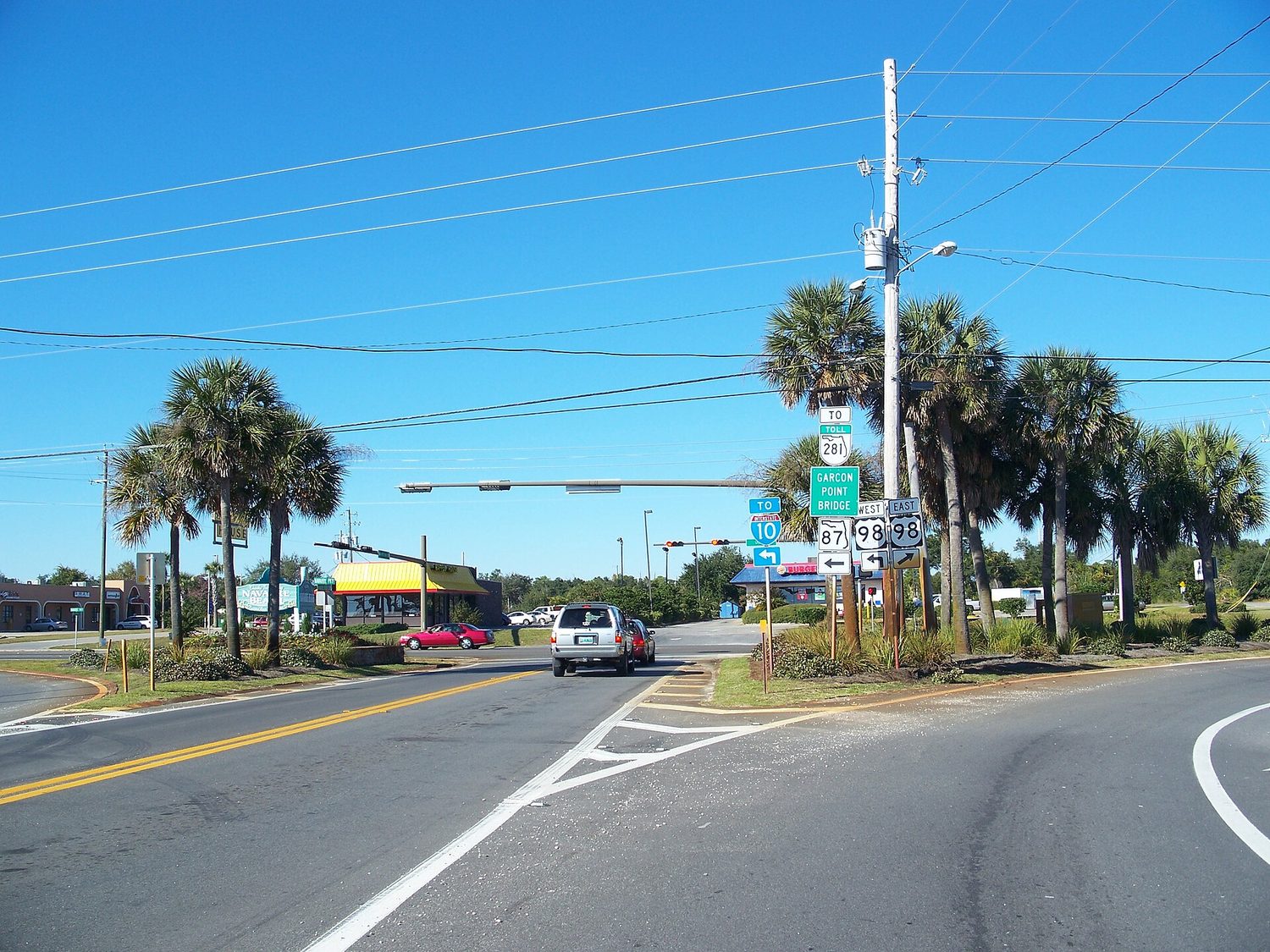
Guy Wyman, a US Army colonel, platted Navarre in 1925 and then did nothing with it. For decades, the land stayed as it was—a stretch of coast that remained quiet far longer than its neighbors. That gap between the plat and the pavement is the town's origin story. Wyman named it for Navarre, the Spanish province near the French border, but the place itself took on a different character: one shaped by what was never built. While other Florida beach towns rushed to add piers, arcades, and motels, Navarre sat with its sand and scrub, waiting. The result is a community where the built environment is less a collection of landmarks and more a study in restraint.
What the Census Reveals About Navarre Beach's Emptiness
The numbers tell the story more honestly than any brochure. Navarre Beach has 2,025 total housing units. Of those, 1,269 are vacant. Another 1,217 are held for seasonal or recreational use. That leaves a permanent population of 1,583 people, with a median age of 51.8 years. The arithmetic is stark: most of the homes on this island are empty most of the year. The 1,269 vacant units outnumber the permanent population—on any given day, most of Navarre Beach is empty, and that emptiness is the point.
Walk the streets and you feel it. Driveways without cars. Windows without lights. A beach that never has to be claimed because there's no competition for it. The seasonal units fill for a few weeks, then empty again. The permanent residents—older, settled, unhurried—move through a town that doesn't demand their attention.
Why Navarre Beach Has No Commercial Core
Navarre Beach has no commercial core. No high-rise hotels, no chain restaurants lining a main drag, no souvenir shops competing for foot traffic. This absence is not an oversight; it's the town's defining feature.
What exists instead is a quiet that feels deliberate. The lack of party venues and retail density means the beach is for walking, not performing. The priorities are legible in what's missing: no need to monetize the sand, no pressure to entertain the crowds. The quiet is an architectural choice, repeated block after block.
How Protected Land Shapes Navarre Beach's Character
The built environment is also constrained by what surrounds it. The Gulf Islands National Seashore sits immediately west of the community, a federally protected stretch of coast that cannot be developed. On the other side, the Navarre Beach Marine Life Sanctuary keeps the waters and shoreline in a similarly protected state. These two forces hem in the town, ensuring that growth has nowhere to go but inward—and inward, for Navarre Beach, means staying small.
The seashore and the sanctuary act as a permanent buffer against the kind of development that has reshaped other Florida beaches. They are the reason the beach remains undeveloped, the reason the built environment stops where the sand begins. Protected land on both sides isn't just a scenic bonus; it's the mechanism that keeps the town's character intact.
Navarre Beach Residents vs. Seasonal Visitors
The census data paints a clear picture of the year-round population. The median household income is $125,545. The median home value is $755,200. More than half of residents—50.6 percent—hold a bachelor's degree or higher. Unemployment sits at 2.1 percent. These are not the numbers of a struggling beach town or a transient community. They describe a place where the people who live here have chosen it deliberately and can afford to stay.
The seasonal population is a different story. The 1,217 homes held for recreational use suggest a second-home market, not a rental economy. These are people who come for a few weeks, leave, and return—not a churn of tourists looking for nightlife. The median gross rent of $1,840 and the high home values filter for a certain kind of visitor: one who values privacy over proximity to attractions.
| Metric | What It Reveals |
|---|---|
| 1,583 permanent residents | A town that is mostly empty most of the year |
| 1,269 vacant housing units | Emptiness is structural, not incidental |
| 1,217 seasonal/recreational units | Second-home market, not rental tourism |
| Median age 51.8 | A settled, older population |
| 50.6% bachelor's degree or higher | Educated, likely professional residents |
| 2.1% unemployment | Economic stability, low pressure |
| Median income $125,545 | Affluent enough to choose quiet |
The Quiet Stretch's Neighbors: A Study in Contrast
Pensacola Beach, just beyond the national seashore, has the development Navarre Beach lacks: hotels, bars, events, crowds. The contrast is immediate and instructive. Navarre Beach sits between a protected seashore and a busier neighbor, and it has chosen to remain the quiet one.
Further afield, the festival towns tell the same story from a different angle. Port St. Joe hosts the Florida Scallop, Music & Arts Festival. Apalachicola has its Florida Seafood Festival. St. George Island runs a chili cook-off. Perry, Steinhatchee, and Cedar Key all anchor their seasons around events and crowds. Navarre Beach has none of that. No annual event draws the masses. No festival puts it on the map. The town's absence from the festival circuit is itself a statement.
Is Navarre Beach a good place for visitors who want solitude? The built environment answers without hesitation. The vacant units, the protected seashores, the missing commercial strips—all of it points to a place that has read the census and chosen to stay small. The quiet isn't a coincidence. It's the product of a plat made nearly a century ago, a protected coastline, and a population that prefers empty streets to full ones.
Common questions
- Is Navarre Beach actually that quiet?
- Yes. It stayed quiet far longer than its neighbors, with Gulf Islands National Seashore on one side and Pensacola Beach beyond it. The built-up area is small—about 1,583 residents and 2,025 housing units—so crowds are not the norm.
- What is there to do besides the beach?
- The beach itself is the main draw, along with the Navarre Beach Marine Life Sanctuary. The Gulf Islands National Seashore is immediately west for protected coast. There are no annual events in town, so plan for nature, walking, and water rather than festivals.
- How many people actually live here year-round?
- The permanent population is 1,583 people, with a median age of 51.8. Many homes are seasonal—1,217 of 2,025 housing units are for recreational use, and 1,269 are vacant, which explains the unhurried feel outside peak times.
- Is Navarre Beach expensive to visit or live in?
- It leans upscale: median home value is $755,200 and median gross rent is $1,840. Median household income is $125,545, and unemployment is just 2.1 percent. Expect costs closer to a resort than a budget stop, but without the resort crowds.
- What's the history behind the name?
- Navarre was platted in 1925 by US Army Colonel Guy Wyman, who did not develop it immediately. The name comes from Navarre, the Spanish province near the French border. The community grew from about 1,500 people in 1970 to over 43,000 today.
- Can I take a day trip to other towns?
- Yes, but they are far. Port St. Joe is 116 miles away, Apalachicola 139, St. George Island 147, Perry 229, Steinhatchee 247, and Cedar Key 279. Each has its own festival, but you will spend most of the day driving.
Every business named above is one we hold a listing for, and every date traces to a source on our sources page. We do not describe menus, interiors or service we have not verified. Details change — confirm before you travel.